When the Shipwrecked Traveller
-------------------------------
When the shipwrecked traveller
came at last to the island, having saved
his toothbrush, pipe, liver trouble and
an old disbelief in miracles from the waves,
time dissolved suddenly like the snowpack,
silence suddenly crackled everywhere,
the traveller’s blood became light
and drunk so drunk and so light that he went
into things and things went
into him in an incandescent thirst so vivid
that his sight stumbled amongst visions,
suffered vertigo, such strong hallucinations,
ecstasies and revelations
so clear, that he became afraid of himself, of becoming
a spider, or a wild strawberry –
so afraid that he threw himself to his knees, praying
to his god who was too great to do miracles,
and let himself fall from a cliff into the sea
just an instant before
he would have received the gift of prophecy.
- Benjamin Fondane
----------------------------------------------------------------------------------------------------
The image of Jesus Christ from the Last Temptation came to me as I read this poem for the first time. A frail little man, torn between the shades of life. The story of the son of a man. The story of the son of God. The story of his struggles between the spirit and the flesh. The story about war and peace in his lifetime.
After a lifetime of 45 years across borders, Benjamin Fondane died in a concentration camp in 1944, perhaps just an instant before he would have received the gift of liberation.
This poem is about a shipwrecked traveller and his struggles between the spirit and the flesh as he finds himself on the island. Not any random island but "the island". Now who is this traveller, and what or where could this island be? The traveller could be any one of us because life is, after all, a journey. A journey without a beginning or an end. It is said that we are made of stardust, that the ingredients in our bodies once formed the hearts of a billion stars or more across billions of years. And this mixture of atoms from across the universe underwent a process of constant assemblage and disintegration until this fleeting moment, where it fused together to give us this form and material for our physical existence. And here we are, a mould of stardust from across infinite lifetimes, cruising to a day when we disintegrate to give form to something else. Maybe another star or a spider or a wild strawberry, but the journey continues.
On reading this poem on a larger canvas of our existence, I take that the island referred to is our lives. This mundane, earthly, often redundant experience of daily life. And no matter how far or how fast one tries to run away from it or how long one wrestles with the waves in search of something better or something extraordinary somewhere else, far away from the crushing ordinariness of our lives, the fundamental principle of life is that no one gets out of it alive. But, our inability or even recalcitrance to comprehend this simple truth often throws us off course, as we inevitably get washed ashore (maybe on a different shore), on this island, like a shipwrecked traveller.
Here, I see the traveller in the poem as someone who kept running for a long time. He was possibly running away to save his madness from this chaotic world. Or he was probably fleeing from those who wanted to conform him to their madness. Or he was just another man who longed to find a place for himself in this often unforgiving world. A man who was in a constant search for his meaning. But now, this poem narrates the last time he got washed ashore. This is what we may call the precipice of living, with nowhere left to run, no ocean left to cross, the defining moment which could either push one into insanity or open their mind to the truth of living, into the beauty of the ordinary that they have always overlooked. The last temptation; take a leap of faith in either direction.
Now that he is at the precipice, he would be experiencing an epiphany of his whole life. A man: after years of running, hiding and fighting, who has reasons to not believe in anything anymore, has the quintessence of his life revealed at that moment of utter hopelessness. And so, time dissolved suddenly like the snowpack, and silence crackled everywhere. This was him, a simple man, opening up to the elements of creation. The atoms in his body would have begun to speak to him in the crackling silence, in a space beyond time, about the truth he so long sought. The burning thirst for the truth despite being so simple and obvious. Something that even he had not known to exist until then. Can this be the moment of enlightenment? Where the eyes would lose sight simply by the ecstatic beauty that unfolds. The hearts of a billion stars that slept in his atoms would have throbbed all at once. A shipwrecked traveller on an island now felt the light of creation coursing through him.
As I said, it is a precipice. The experience of witnessing himself stripped bare to reveal his essence would have been bewildering for the poor soul. And so, he became afraid of himself. Nothing terrifies a man more than seeing himself for who he truly is. But it is the necessary catharsis, like a rite of passage. And so he stumbled, clueless, afraid, like a child, he wept. The truth is always as simple as a feather, but it can crush a mountain if not ready. And so, he melted at the sight of his own glory. For now, he has seen where he comes from and where he passes to. But the ever-rebellious human in him was still unwilling to let go and wanted to cling to this human form despite realising its ephemerality. The war raged on within him between his spirit and the flesh. Finally, he threw himself to his knees and surrendered to his God, his spirit now hoping for a miracle, a deliverance. But the flesh, in its hubris, chose to take a leap off the cliff for one last time, perhaps hoping that now it would wake up from this dream into the world it once knew. Now, isn't that too a leap of faith? I don't know!
As I conclude my reading of this remarkable poem, a few questions remain, as the residual effect of the time we live in. As we often experience, it is getting quite difficult to find peace or calm or even beauty around us, within us. The days can get overwhelming, and we lose faith in everything, abandoning hope. We are all shipwrecked travellers, one way or the other. Only our stories slightly differ. We are either fleeing from or searching for something, but the net result is us left stranded on these islands, exhausted. So I wonder; What do we truly desire? What are we truly looking for? What is the meaning of this search? Who/What/Why is God? What is a miracle? I'll pause now. And I hope there are no universal answers to these questions.
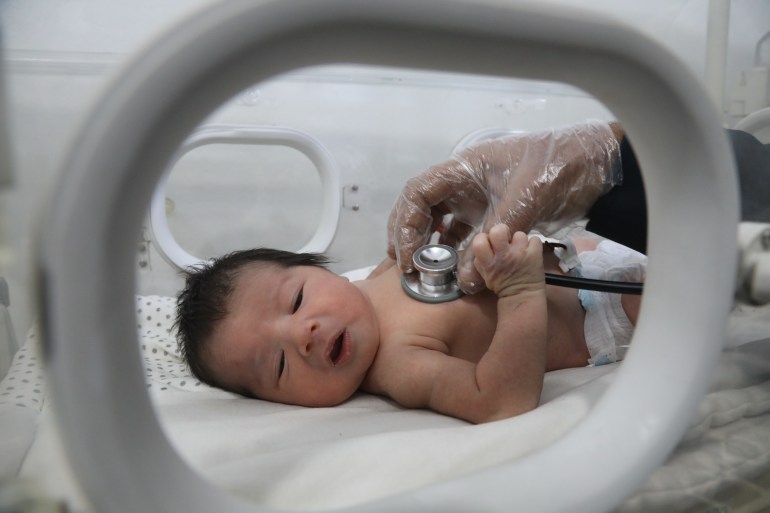
All we can do is search our feelings, not to find anything in particular, but to see who we are and learn to love, forgive, be compassionate and make peace with it. As to the question of miracles, I suppose, the very existence of each one of us is a testimony by itself. And what reaffirmed my faith in miracles lately was the rescue of a baby girl born under rubble after the earthquake in Syria. And she was named Aya, meaning 'Miracle' in Arabic. A miracle is, after all, what appears impossible, but happens anyway, and I think we must only have the courage to see it. A simple leap of faith is all it takes.
- Harishna